
Reverb
Helping Sellers Drive Repeat Purchases with Thank You Coupons
Context
In 2023 I was a product designer on Reverb’s Affordability Team, where we worked on both sides of the two-sided marketplace, focused on giving sellers the tools and information they need to price their listings competitively and make sales, while helping buyers discover the best priced gear on the platform.
The Problem
This was especially limiting for high-volume and professional sellers who wanted to build longer-term customer relationships within the constraints of our marketplace.
Based on seller feedback and market research, the team aligned on post-purchase “Thank You” coupons as an effective and scalable way to support seller-led retention within Reverb’s marketplace, while also working towards our goals of increasing affordably-priced inventory and driving Reverb’s GMS.
My Role
As the sole UX/UI designer on this project, I owned the end-to-end design of the Thank You Coupons experience across all platforms, covering both seller-facing coupon creation and buyer-facing redemption touch points, and partnering closely with Product, Engineering, Seller Outreach, and Marketing, and Legal stakeholders.
Defining Scope
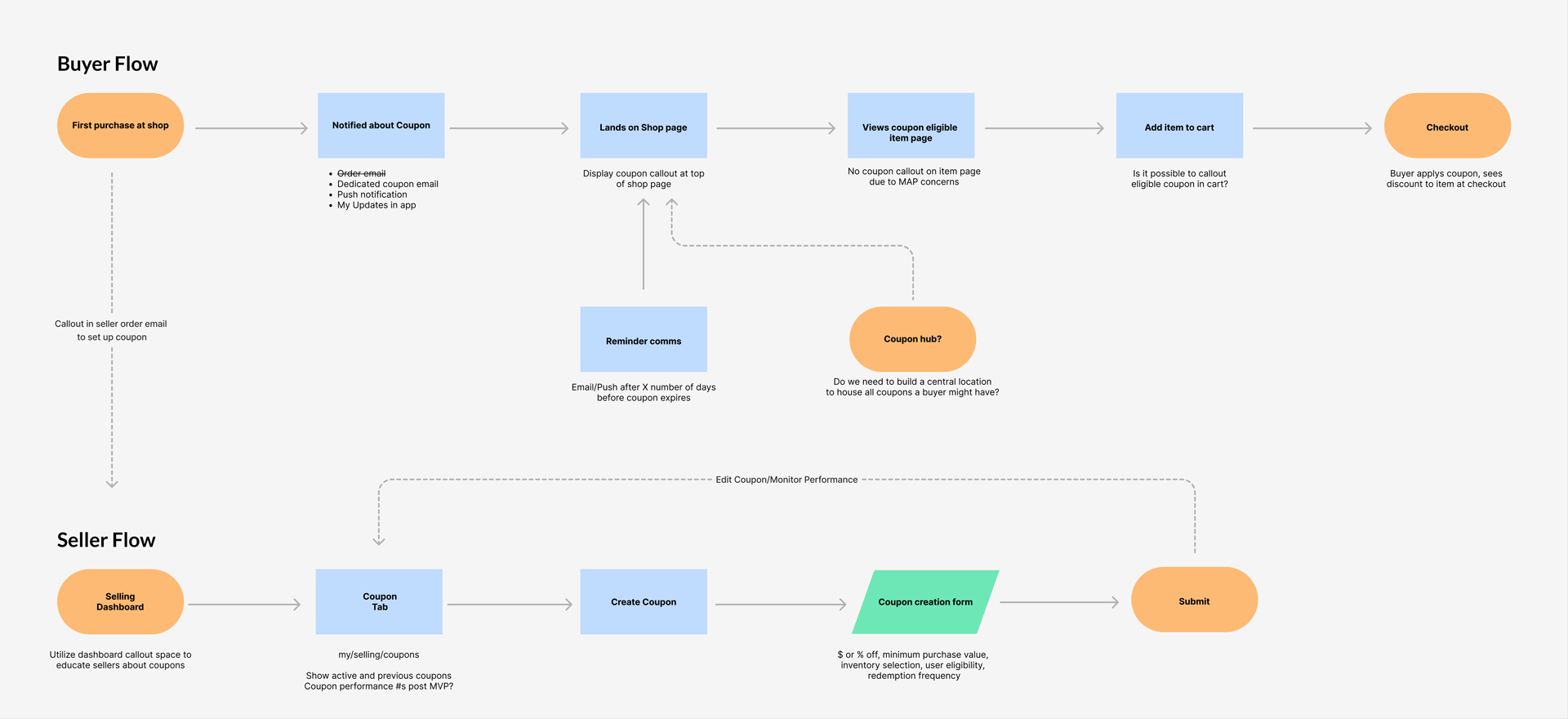
With no firm MVP defined at the outset, I started by mapping end-to-end flows for both sellers and buyers, covering every potential touch point, and highlighting open UX questions. This helped the team align on priorities and narrow the initial scope for our MVP.
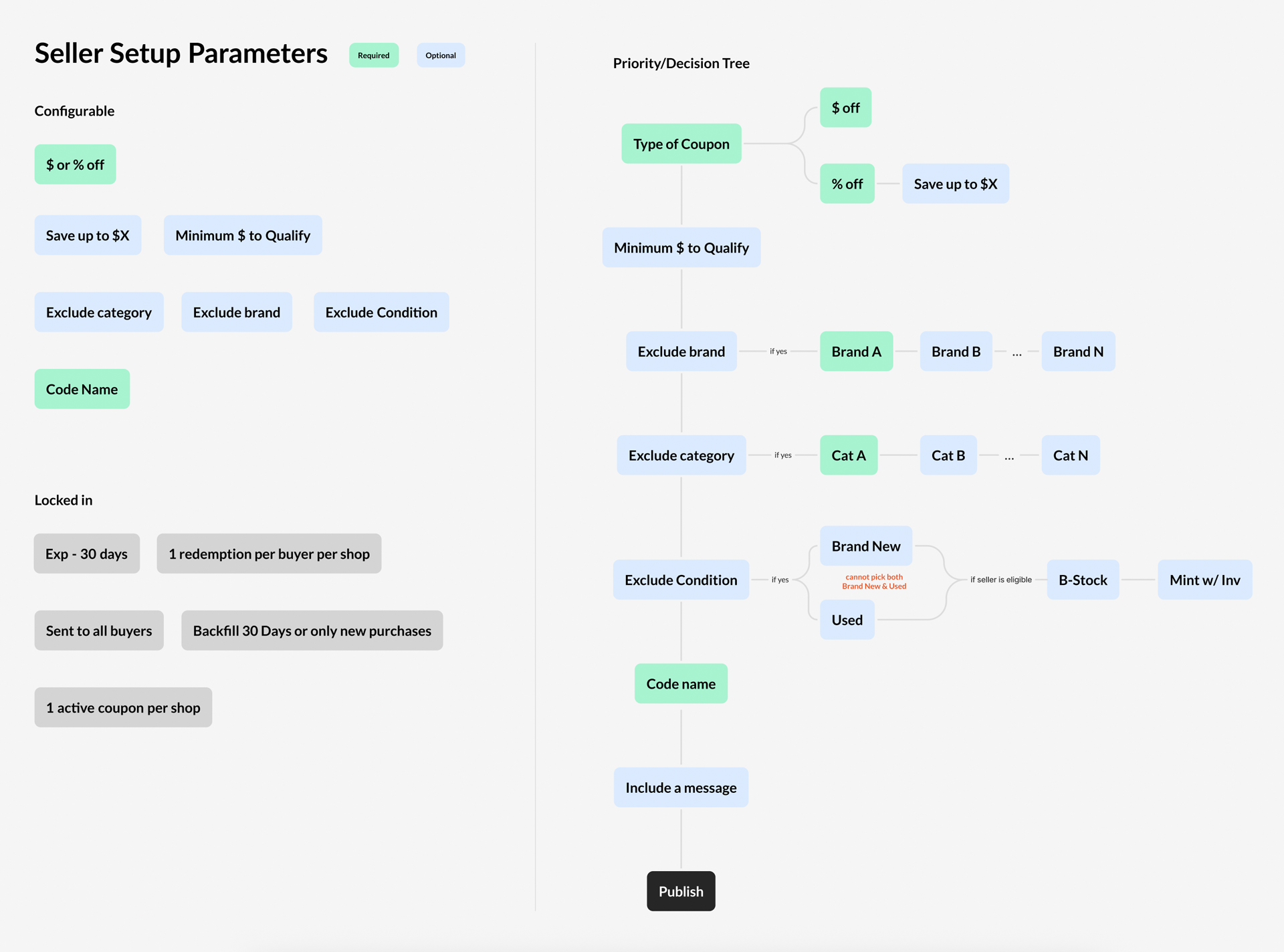
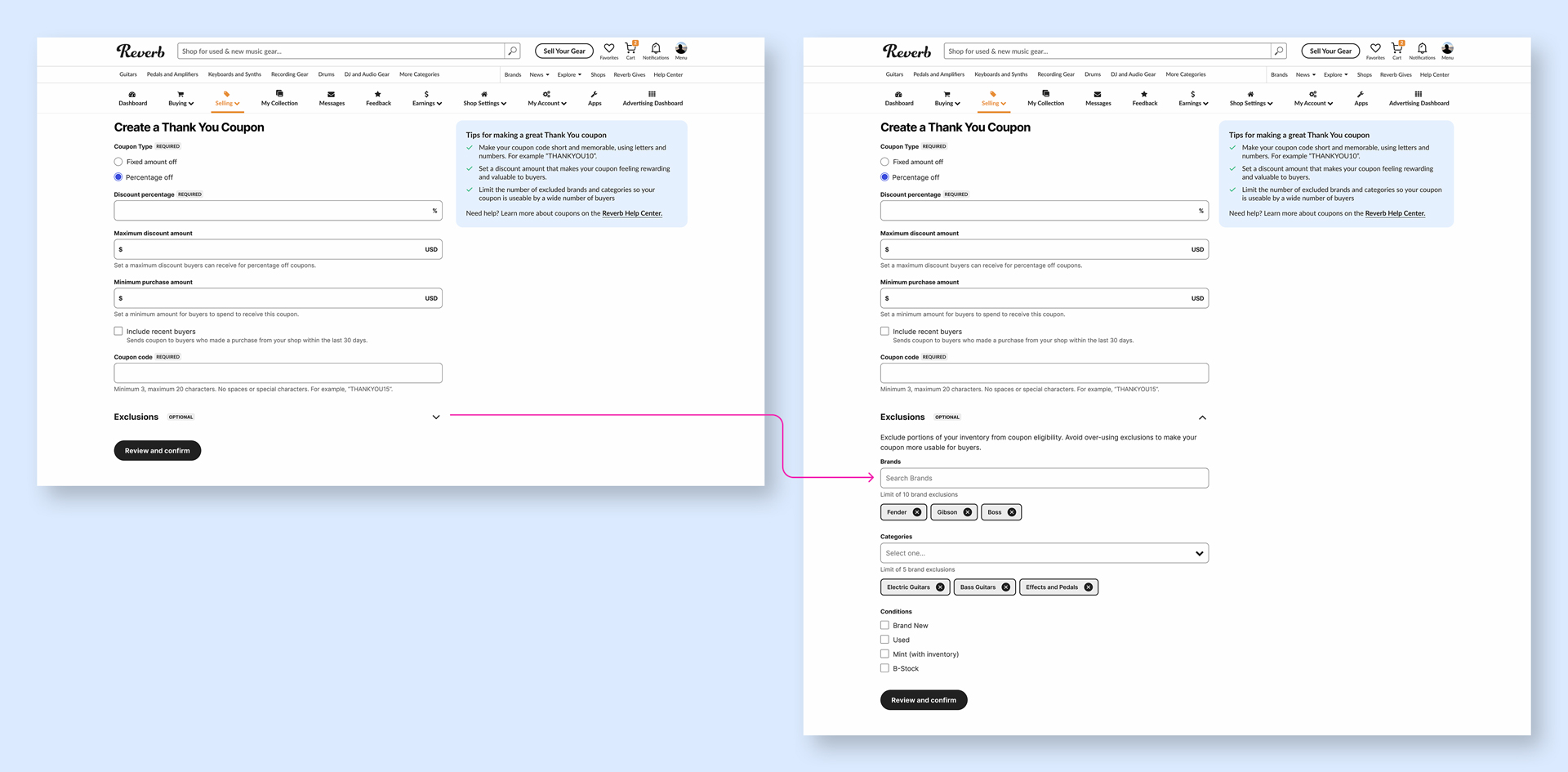
Many sellers operate under Minimum Advertised Price (MAP) agreements from suppliers, limiting how and where discounts can be shown. The coupon system needed to support brand and category exclusions to ensure sellers could use the feature without violating these agreements.
Given this complexity, I chose to focus first on the seller experience. The way sellers configured coupons would directly determine what needed to be communicated to buyers downstream.
Balancing Buyer and Seller Needs
Buyers don’t want to have to think about when and where they can use a coupon, they just want to be able to get a deal on their next piece of gear. To me it was essential to design this experience to make it as quick and convenient for buyers to use coupons when they get them.
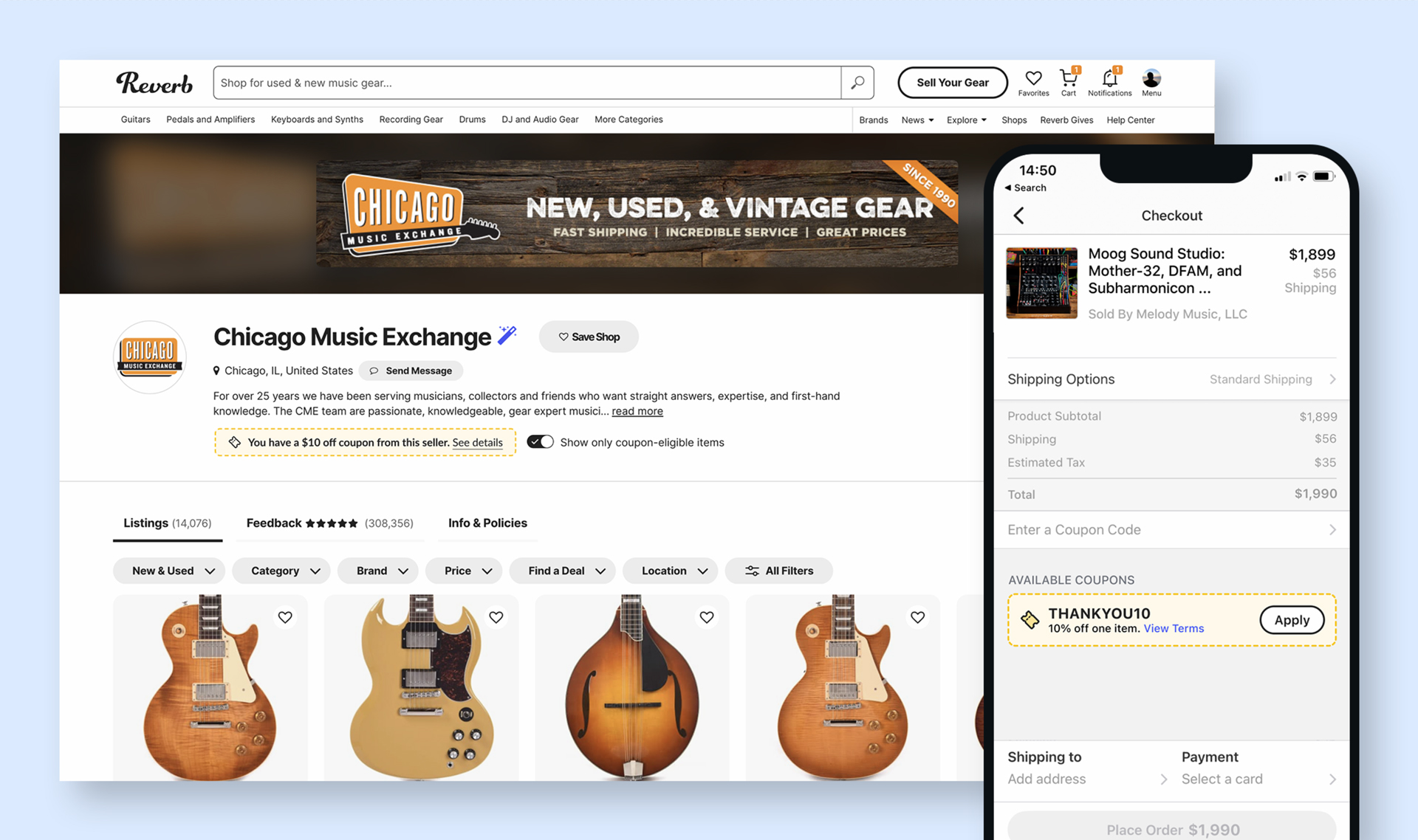
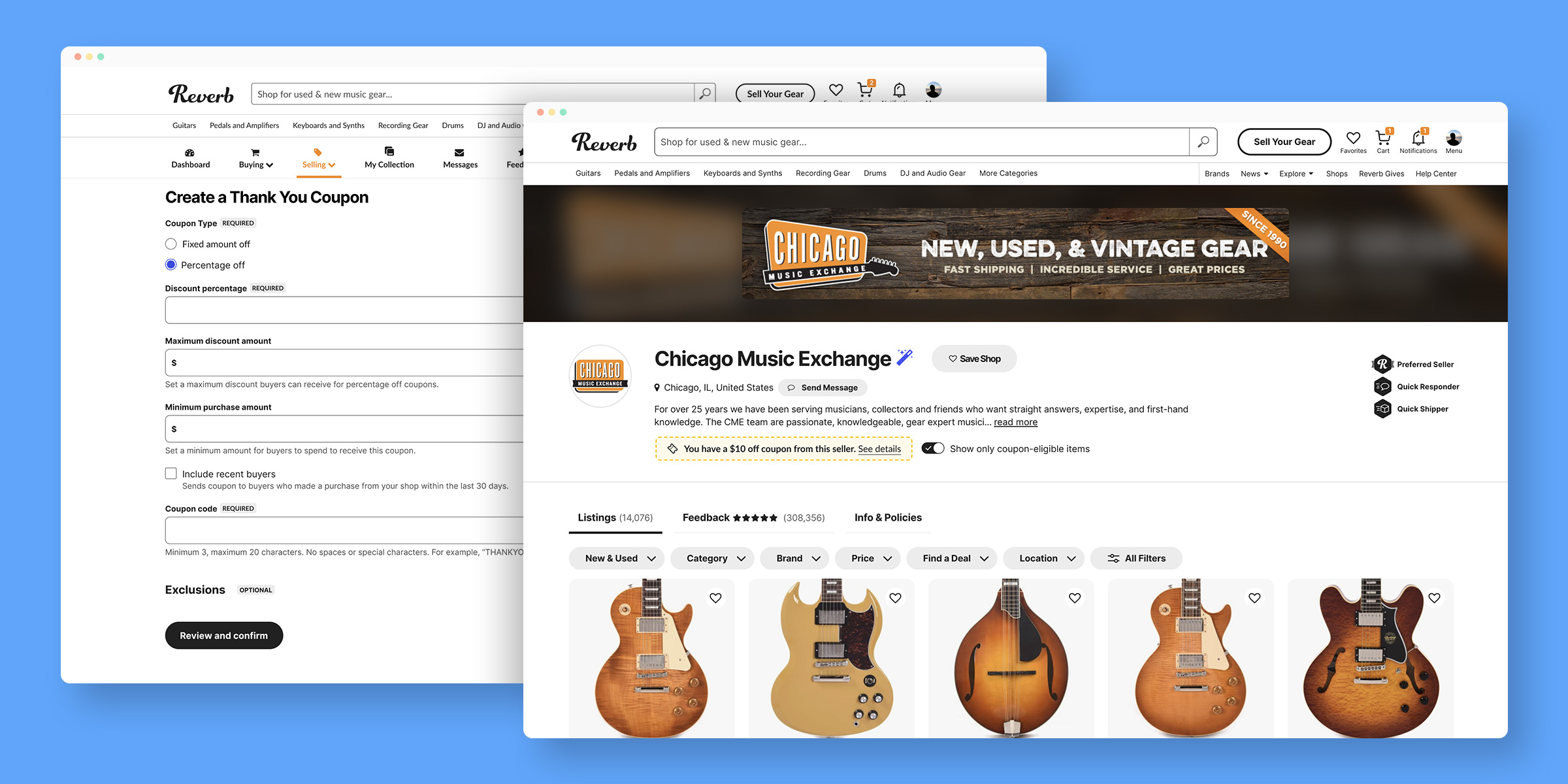
Because a coupon could exclude inventory, I decided to add a toggle near the coupon callout on shop pages to let users easily see the items available for discount. When a buyer clicks from emails or push notifications, this filter is applied by default, taking out any guesswork. Eligible coupons are automatically surfaced in cart and checkout, and users can instantly apply them with a single press.
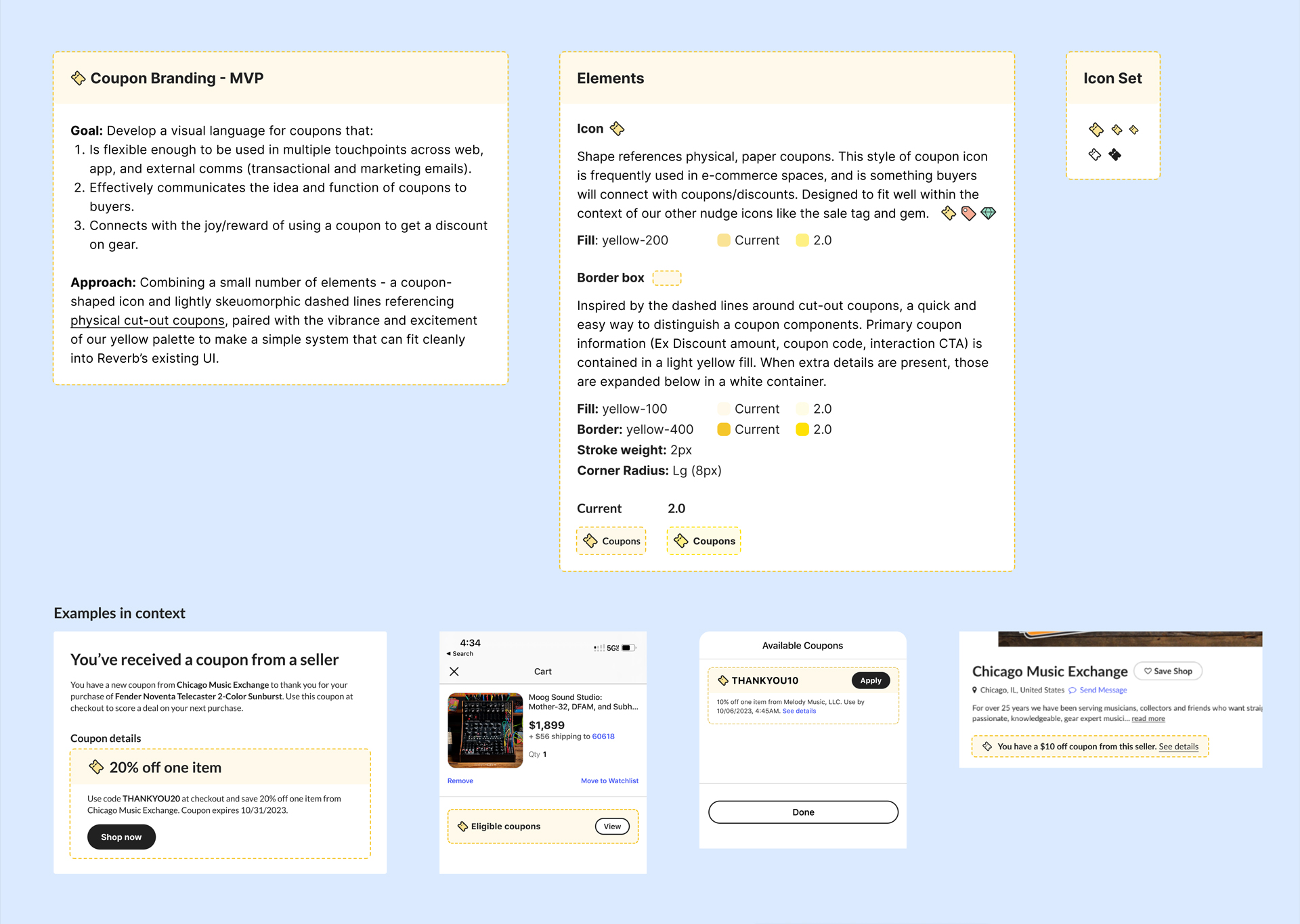
Building the Coupon Look
Introducing Thank You coupons to Reverb provided an opportunity to give them some flare while still fitting into the larger Reverb design system. After extensive iteration I developed a small—but flexible—visual language for coupons, including: a custom coupon icon, a dedicated color palette, and a dashed border inspired by real-world cutout coupons.
Launch & Impact
Working closely with our team members in Seller Outreach, we were able to get early builds of the new coupon tool in front of several top sellers to beta test the feature, and incorporated their feedback prior to launch
Despite the large scope and tight timeline, we were able to ship the Thank You coupon MVP and onboard sellers ahead of Black Friday, allowing them to re-engage the influx of new holiday buyers with targeted incentives. The feature saw strong early adoption and enthusiasm among high-volume sellers, ultimately validating our belief in the value of a seller-controlled retention tools.
